

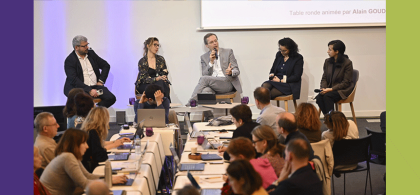
Preparatory classes and artificial Intelligence: the 5 lessons to take away from a day of reflection
18/04/2025
NEOMA and APHEC brought together teachers from preparatory courses to explore artificial intelligence.
NEOMA’s world

Published on 07/09/2026
You’ll find selected excerpts below, and the full interview can be heard HERE.
I want to tell them that there have always been ups and downs in the job market. And it's true: the market is tougher today than it was a few months ago. We’re going through an economic crisis, and these cycles mean that some years are more difficult than others. We tend to blame AI a lot for this, but I think AI is sometimes used as a handy scapegoat to justify hiring cuts.
What I want to tell young people, first of all, is that AI is generating lots of new jobs. What’s more, in a study conducted at the Conférence des Grandes Écoles last June, half of the students surveyed told us they thought artificial intelligence would have a positive impact on their careers. I think AI is creating a wealth of opportunities and jobs related to organisational transformation, whether it’s in technology, science or management.
One thing that’s for sure: young graduates start out in their first job and in ten years’ time they’ll probably be doing something totally different because we’re in the middle of a tech revolution. But that’s a positive thing: they’ll keep learning all their lives and their jobs will keep changing with them.
I want to give them an optimistic message. Hang in there. It might take longer to find a job today than it did two or three years ago, but you will find one. And you’ll go through a positive transformation that will also redefine the nature of future roles.
Absolutely. Jobs related to transforming businesses through artificial intelligence are growing fast. So yes, there are countless opportunities in the field of AI right now, such as project managers, computer scientists and data scientists. And the Grandes Écoles have developed new courses to prepare their students for the future.
The business school I head up, NEOMA, has created a master's programme called AI for Business. In other words, we're all developing programmes around AI, and it's true that it's one of the sectors that’s expanding rapidly.
The way we assess students begins, above all, with transparency. We’re going to have exercises and assignments that make use of AI, and that’s something we recognise and accept. We encourage our students to use it, we know they use it, and we also know they’ll use it in their future careers. So we tell them: go ahead. These assignments will typically consist of group work, creative tasks and projects. Students are told: use AI just as you’ll use it in your jobs in the future. But then explain to us what the AI told you, what your human intelligence added and how you prompted it and so on. That's part of the evaluation.
And then conversely, we’ll also still have old-style forms of assessment, so to speak, either pen-and-paper tests or using computer tools that block access to AI, especially for end-of-semester exams. Because it's important as well that students know – and understand – what they're talking about. And we’ve seen that the more you know about a subject, the better you can use AI and the better your prompts will be. So, we want to check that our students understand and master their subject.
In the end, it’s almost as though oral assessments are making a comeback. It’s often said that, in the age of AI, what will really make a difference are soft skills: human qualities, critical thinking, leadership and creativity. And a lot of those qualities can be measured through oral assessments. Instead of spending 15 minutes marking a paper, I’ll spend 15 minutes questioning my students, and I'll see very clearly what they understand and what they don’t. For now, AI isn’t capable of doing that for them.
18/04/2025
NEOMA and APHEC brought together teachers from preparatory courses to explore artificial intelligence.
28/08/2025
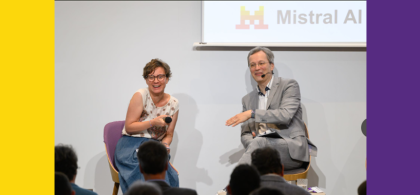
NEOMA and Mistral AI organised a morning seminar devoted to AI in June, and here we take a look back in pictures.