


NEOMA professors among World’s Top 2% Scientists
15/10/2026
Stanford University published its 2026 ranking of world’s top 2% most influential scientists from all areas
NEOMA’s world

Published on 27/05/2026
Setting up a company that aims to make a difference often means navigating a trade‑off between social impact and financial performance. A study co‑authored by NEOMA researcher Steven Brieger, which tracked ten British SMEs, shows that these competing demands never disappear entirely… and can even become a catalyst for innovation.
You may even have come across these businesses. There’s the designer who repurposes waste nylon to make ethical clothing. The energy renovation entrepreneur who is trying to convince local communities to switch to heat pumps. And the entrepreneur who sells less than perfect fruit and vegetables to tackle food waste.
Not one of the businesses above was created by accident, but their path to success has seldom been straightforward. How can you stay true to your values around sustainability while ensuring the economic viability of your company? How far can you grow without betraying your founding mission? And how should you react when the market or institutions fail to keep pace?
It is precisely these kinds of dilemmas that the NEOMA researcher and his colleagues set out to investigate. Through their work following ten British SMEs committed to sustainable practices, the team uncovered a series of “sustainability tensions” where economic, social and environmental objectives come into conflict.
In a number of the cases in the study, everything began well before the company was created. Some entrepreneurs described what the researchers call an “identity tension”: their professional role no longer matched the impact they wanted to have on society. One of them, a former banker, explained that he had spent a long time wondering what the real purpose of his work was. His dissatisfaction grew until he could no longer ignore it. He quit the world of finance to launch a social enterprise that supports the construction of sanitation facilities in developing countries.
Other participants in the study highlighted what they called a “tension of values”. One entrepreneur, after spending years in the fashion industry, gradually discovered the darker side of a world increasingly at odds with her principles, from its production conditions to its waste and environmental impact. She launched her own label so she could work with recycled materials. In each of these cases, the competing demands weren’t a barrier but a catalyst for action.
The tensions do not disappear once a business gets off the ground: they scale up and shift from the individual to the organisational. They begin to shape how the business actually operates, covering operational choices, economic viability and even decisions about growth.
The study highlights a firm that collects wood waste from building sites for recycling. The goal was simple enough: to convert waste into a resource. But doing so required lorries to travel across the region, meaning that saving the wood came at the cost of burning diesel. As a young company, it lacked the resources to invest in the electric vehicles capable of handling these heavy loads. As a result, the owner explored a different solution: he focused on logistical innovation to cut the carbon footprint of his routes, which are now fewer and efficiently optimised.
Other tensions directly shape the future of these companies. If they want to keep acting, they first have to make sure they stay afloat. The study cites the case of a bus operator who had built his business model around biodiesel made from recycled cooking oil. This was a cleaner and more affordable alternative to conventional diesel… at least, it was until compatible vehicles disappeared from the market, at which point the entire model collapsed. A new way forward was needed, especially in such an uncertain landscape. The entrepreneur turned to electric buses, which were more closely aligned with his mission – but still costly and not fully tested. It was a gamble with economic as well as strategic challenges at stake.
Not all these tensions, however, originate within the company itself. Some emerge when innovation collides with its environment, such as consumer habits, markets or public policy.
The study presents the case of an entrepreneur who develops bioplastic‑based packaging solutions. From a technical standpoint, the product works. But convincing customers is another story. The materials are more expensive, and many market players continue to favour existing solutions. The entrepreneur then found herself facing an inherent conflict: suggesting a sustainable alternative in a system that was still heavily reliant on plastic. She wanted to change the world, but the world wasn’t ready to change yet.
The tensions do not vanish: they change shape as a company moves forward and, rather than trying to eliminate them, entrepreneurs learn to deal with them. The researchers use the term “paradox mindset” to describe the ability to hold conflicting objectives at the same time without giving up any of them. In other words, the ability to reconcile societal impact and economic viability. These companies progress through compromise, alternative solutions and innovation. In summary, tensions are not merely obstacles. They can also become driving forces.
This analysis applies equally to public authorities. The shifting nature of the tensions at each stage of a company’s development challenges the notion of a one‑size‑fits‑all support system that overlooks these transitions and risks missing its target.
Zeng, K. Y.-E., Thapa Karki, S., Brieger, S. A. and Preuss, L. (2026). Navigating competing priorities for societal value creation: Tensions in sustainability-driven enterprises across venture stages. Small Business Economics. https://doi.org/10.1007/s11187-025-01155-7
15/10/2026
Stanford University published its 2026 ranking of world’s top 2% most influential scientists from all areas

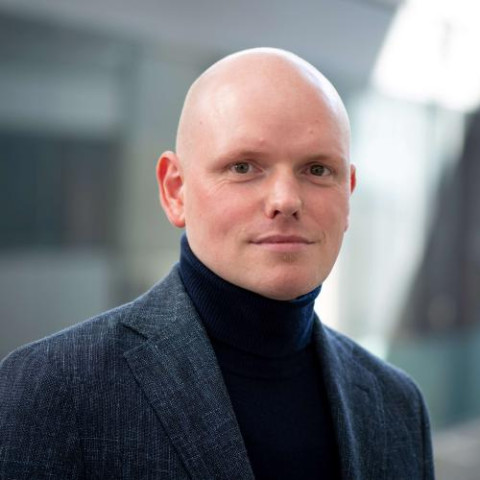
Steven A. Brieger is Full Professor of International Business and Entrepreneurship at NEOMA Business School. Prior to joining NEOMA, he was an Associate Professor at the University of Sussex in the United Kingdom. He holds a Ph.D. in Management and Entrepreneurship. Steven's research examines the mu