



Master in Management
With the Master in Management become a top-level business leader, capable of meeting the expectations of organisations all over the world.
2 to 3 years
NEOMA’s world
Published on 26/10/2026
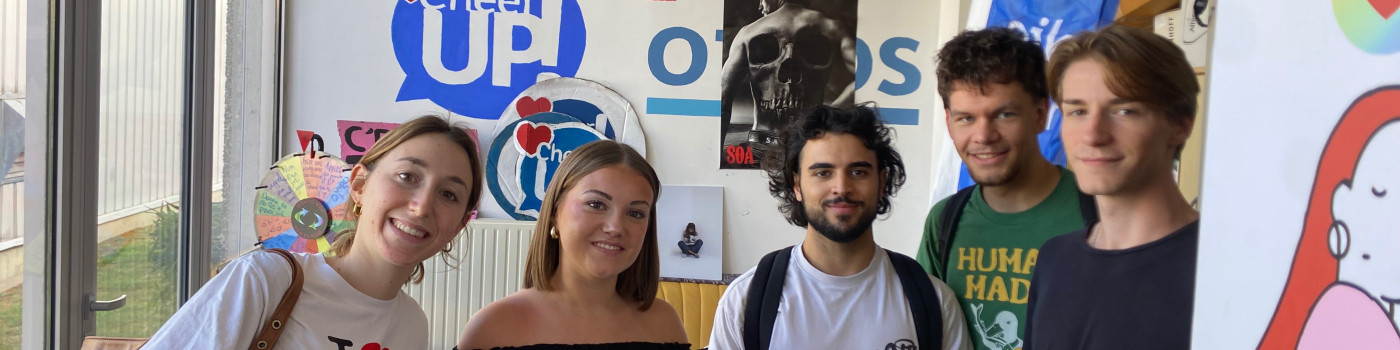
Launched last year, NEOMACT Project is the School’s solidarity engagement initiative. On the day of the launch, NEOMA students are invited to step out of the lecture halls and take action in the field. For the 2026 edition, no fewer than 950 first-year MiM (L3) students took part.
Through this initiative, NEOMA raises awareness of social and environmental issues (poverty, disability, gender equality, biodiversity, culture, sport); it also develops students’ ability to build connections, take action in the field, work as a team and showcase their commitment in their professional journey.
A conference. The day began with a conference by makesense, the initiative’s partner and a specialist in solidarity engagement. The idea: to define impact and highlight the careers linked to CSR. Six alumni also took to the stage to share the impact of their actions, which they had started during their time at NEOMA.
Actions. Students were divided into teams of seven. Their challenge: to complete missions inspired by the Sustainable Development Goals. They could choose from around fifteen actions to carry out independently: calculating their carbon footprint, convincing five strangers to do some sport, cooking a vegetarian dish as a team, writing letters to isolated elderly people, picking up cigarette butts or even signing a petition to support a cause. Each challenge completed earned them points.
Concrete results :
Workshops. Each team also attended a 1.5-hour training session with a partner association. The topics were varied: isolation of elderly people with 1 Lettre 1 Sourire, gender stereotypes with HeForShe, food and ocean protection with Blutopia, professional integration of people with disabilities with Handisup / @Talent Égal and KPMG. In Reims, additional topics were covered, such as air pollution (ATMO), social emergency (Red Cross) or urban agriculture with the planting of a honey and fruit hedge (Happy Culture).
The day ended with an awards ceremony: the teams that had completed the most challenges were rewarded.
From November to the end of April, students must complete 20 hours of voluntary work. To do this, they have access to a platform, a kind of catalogue of possible missions. These can be carried out with a local NGO, a NEOMA association or a School service. Those already involved in an external organisation can have their activities recognised.
21/10/2026
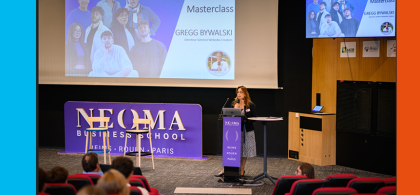
Cécile Reinaud, founder of Séraphine, and Gregg Bywalski, CEO of Webedia, came to share their experiences.

09/10/2026
Cancer and management: our students also learn through research.