

NEOMACT PROJECT: nearly 1,000 committed students
26/10/2026
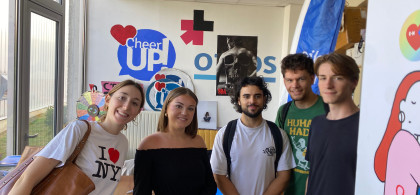
On 15 October, the School launched the 2nd edition of the NEOMACT PROJECT. A look back at this day commitment.
NEOMA’s world

Published on 21/10/2026
At NEOMA, active learning is a core belief. The idea is simple: students engage with the content and become active participants in their own learning. It is in this spirit that our professors and our partner, Ferrero, designed this augmented reality game.
How does it work? Students form teams of five and take on the roles that span Kinder Bueno’s life cycle: raw material procurement, production, transport, retail and end-of-life packaging recycling.
All teams share the same goal: to reduce the product’s greenhouse gas emissions within a limited budget. To achieve this, they activate several levers: supplier selection, transport modes, energy efficiency, route optimisation, packaging reduction or recycling.
The roles are interconnected. Every decision made in one area affects the others, as well as the emission levels and the budget. The professor regularly introduces random events that redistribute the game’s data. The session ends with a collective debrief, where each team reconstructs its ideal supply chain.
Augmented reality makes these trade-offs visible. By pointing their phones at the game board, students see 3D visualisations of the factory, warehouses and trucks. They track the carbon footprint and budget in real time.
“ With this educational game, students no longer approach decarbonisation in theory—they experience it firsthand ,” explains Aurélien Rouquet, Professor of Logistics and Supply Chain Management at NEOMA and the game’s creator.
This simulated environment allows students to experiment and make mistakes without risk. The shared goal, however, encourages everyone to cooperate in a complex and uncertain context.
The game was developed by NEOMA’s Learning Lab, the School’s team dedicated to educationnal innovation, in cooperation with Ferrero. It was initiated by Professor Aurélien Rouquet, who is also the author of this device.
The Learning Lab has been working on these formats for ten years. With augmented reality, the School remains true to its principle: putting technology at the service of meaning.
“ Our partnership with Ferrero is based on a shared conviction: management training benefits from being grounded in the reality of businesses ,” highlights Delphine Manceau, Dean of NEOMA Business School. For Christophe Bordin, Head of Societal Engagement at Ferrero in France, it is also a shared ambition: “ to prepare tomorrow’s managers for the realities of the field .”
26/10/2026
On 15 October, the School launched the 2nd edition of the NEOMACT PROJECT. A look back at this day commitment.
21/10/2026
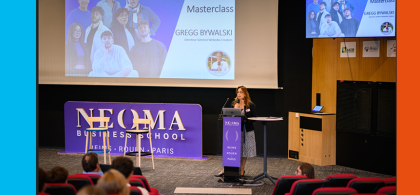
Cécile Reinaud, founder of Séraphine, and Gregg Bywalski, CEO of Webedia, came to share their experiences.
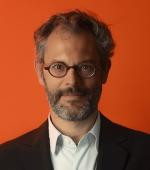
Aurélien has been Professor of Logistics and Supply Chain Management at NEOMA Business School since 2008. He is an Engineer of the Ecole Centrale de Lille, holder of a M.Sc. from Cranfield University and earned his PhD in Management Sciences in 2007 at the Université Aix-Marseille. His research fo