

NEOMA professors among World’s Top 2% Scientists
15/10/2026
Stanford University published its 2026 ranking of world’s top 2% most influential scientists from all areas
NEOMA’s world
Published on 17/03/2026
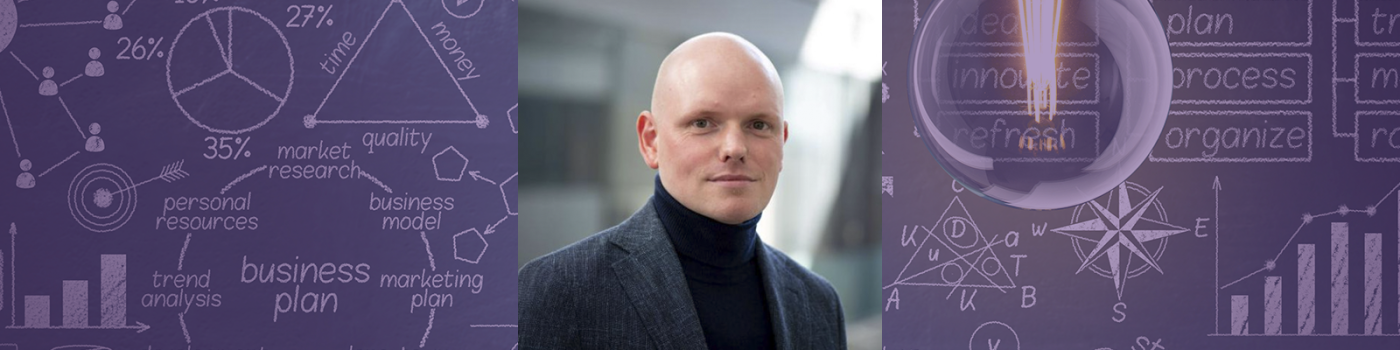
How do small business owners make decisions when they have to choose between their economic, social and environmental goals – especially if sustainable development is central to their business strategy? When four researchers, including NEOMA’s Steven Brieger, interviewed ten SME leaders, they found that these entrepreneurs rely on two specific approaches to collect information, interpret it and shape their decisions.
Natural habitats are deteriorating, social inequalities are intensifying and the pursuit of profit remains the dominant force worldwide. How can leaders uphold the ideals of sustainable development and play a role in tackling the challenges while running a business? Although these questions have already been explored in large corporations, they have not received the same attention in SMEs, despite the significant impact these smaller firms have on society and the environment. While these companies may be modest in scale, they exist in far greater numbers.
This is what sets apart the article by the four researchers. Furthermore, the team focused on SME leaders whose businesses are firmly committed to sustainable development, which makes the consistency of their decisions all the more critical.
Meeting this requirement is especially delicate, as these “small” entrepreneurs are already under significant strain. They have to cope with limited resources, massive amounts of information, constant pressure from urgent issues and isolation when confronted with major decisions. Hence the researchers' key question: when running their day-to-day operations, how do these entrepreneurs make sense of the conflicting demands of their economic, social and environmental priorities to reach decisions?
In the article, these competing priorities are described as “tensions”, meaning new, ambiguous or confusing issues or events for which there is no immediate solution.
To take just a few examples:
How can my SME access a green technology that it cannot afford?
How can I convince consumers of the value of ethical products when they do not yet appreciate their benefits?
Is it possible to organise work schedules in a way that respects employees’ work-life balance, given that this is one of my firm’s social commitments?
The researchers interviewed ten British entrepreneurs using semi‑structured interviews ranging from 45 to 90 minutes. The aim was to understand how these leaders gathered, interpreted and used information to take action when under pressure.
The first takeaway is that for these socially-aware leaders, focusing on financial performance is not at odds with sustainable development. The two issues are not just interconnected but even synergistic. There is no need to choose between business and the planet; it is entirely possible to strike a balance between the two.
Another key insight is that tensions between sustainable development priorities are not only common but often recurring. Leaders must accept these tensions, not fret about them; analyse them with a cool head rather than emotion; and adapt to each situation instead of applying a single, uniform method.
To respond effectively to these tensions, the leaders interviewed draw on two distinct modes of thinking depending on the context: a “linear” method and an “open” approach.
The linear approach is used when the survival or growth of an SME is at stake. It requires limited cognitive effort since the nature of the tension is clearly defined. There are only a handful of potential solutions, and it is easy to identify the best one… even if putting it into practice is not always straightforward.
Let’s say that the boss of an SME tackling food waste realises that he needs to fast-track his firm’s growth by raising capital to increase its impact. He compares up several different options, including business angels and crowdfunding, which he ultimately opts to put into practice simultaneously.
Conversely, the open mode is used for complex tensions where it is difficult to unpack what is at stake. Making sense of the situation requires time and thoughtful analysis that explores several possible ways forward and draws on multiple perspectives. This process generates several potential solutions that need to be weighed up carefully before any decision is taken.
For example, the head of a bioplastics SME may be unsure whether to patent a product or release it as open source so that it is accessible to everyone. She seeks advice from a number of industrial property experts and realises that, if she waits, a competitor could file the patent before her. She therefore decides to act quickly so she can retain control of her innovation. She is even willing to forgo claiming royalties at a later date.
A second round of reasoning now begins: when should she file the patent, given that the bioplastic is still under development and that filing it would mean “freezing” its formulation?
This second scenario highlights a potential synergy between the two modes: the businessperson may start with an open approach (whether to patent or not, and why), then shift to a more linear stance once the solution has been identified (when is the right time to file a patent?).
The agility of SMEs in responding to the pressures of sustainable development depends on their capacity to shift from one mode of thinking to another as circumstances change: is the situation urgent? Is it straightforward or complicated? Is the leader encountering the problem for the first time, or is he or she already familiar with it?
The authors note that entrepreneurs favour the linear mode when they believe they possess the necessary expertise, and turn to the open mode when they are operating in unfamiliar territory. Consulting experts, clients, suppliers, investors and other stakeholders helps them move beyond isolation and reach more informed decisions.
This article will not only give SME leaders peace of mind but also equip them with the tools to manage the tensions that arise along the road… the surest way to remain a thriving, socially engaged company under any circumstances.
Kate Yi-En Zeng, Lutz Preuss, Shova Thapa Karki and Steven Brieger, “How do entrepreneurs make sense of and respond to sustainability tensions? Insights from sustainability‐driven enterprises”, British Journal of Management, December 2025. https://doi.org/10.1111/1467-8551.70026
15/10/2026
Stanford University published its 2026 ranking of world’s top 2% most influential scientists from all areas
15/10/2026
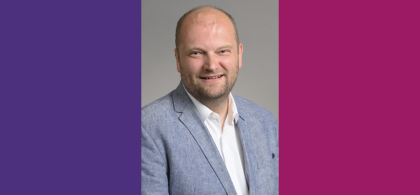
Antoine Souchaud, our Associate Dean for Faculty and Research at NEOMA, looks back at the School’s major projects.
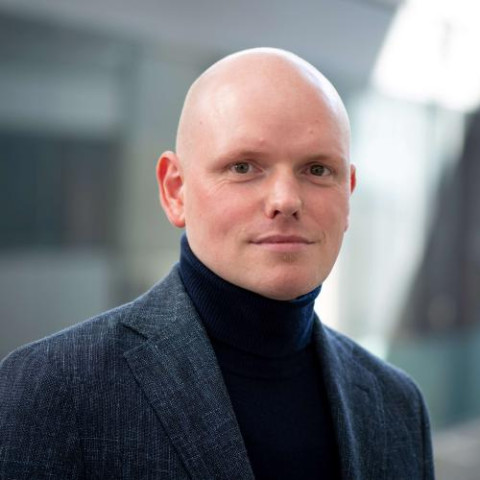
Steven A. Brieger is Full Professor of International Business and Entrepreneurship at NEOMA Business School. Prior to joining NEOMA, he was an Associate Professor at the University of Sussex in the United Kingdom. He holds a Ph.D. in Management and Entrepreneurship. Steven's research examines the mu