


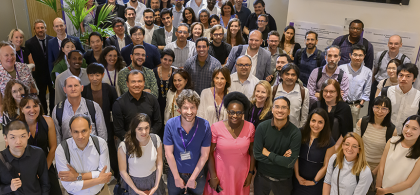
NEOMA professors among World’s Top 2% Scientists
15/10/2026
Stanford University published its 2026 ranking of world’s top 2% most influential scientists from all areas
NEOMA’s world

Published on 12/03/2026
NEOMA is unveiling a new research chair this March dedicated to end‑of‑career management. How do age, fatigue and adaptability affect the productivity of older employees? What measures can help optimise the final years of working life? These are the kinds of questions explored by NEOMA professor Gilbert Cette and his team. The chairholder and economist tells us more below.
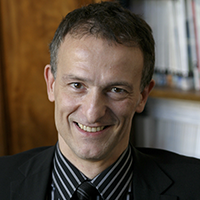
The primary aim of the chair is to help develop NEOMA’s research activities by opening new lines of inquiry centring mainly on age‑related issues. The first priority will be to distinguish the effects of age from the horizon effect. Are employees less productive at the end of their careers for physical or psychological reasons (the age effect)? Or is it because employees and companies invest less in training and skills development for older workers (the horizon effect)? If our econometric analyses show a strong horizon effect, this would indicate that action is needed to sustain the employability of senior workers. This research would then be valuable for both private companies and public authorities.
This second line aims to characterise the obstacles to the diffusion of AI, including possible age‑related factors. The challenge here is to determine to what degree training programmes targeted at senior employees could facilitate the roll-out of artificial intelligence, assuming that AI enhances business performance.
Absolutely. France’s gross domestic product per capita is 15%, 20% or even 30% lower than it is in the Nordic and Scandinavian countries, Germany or the Netherlands. And one of the main factors for this is the low employment rate among low‑skilled workers, young people and especially seniors — people over 55, in other words. Raising their employment rate is essential if we’re going to finance our goals in healthcare, education, defence, pensions and so forth. All of this means it’s crucial to understand the barriers to employing older people.
There will be two teams of researchers. For the first line of research, the team will consist of myself and Francis Kramarz, a globally recognised expert in econometrics. The second team will include the Italian economist Giuseppe Nicoletti (LUISS University) and Océane Venerey, a young PhD student from the University of Burgundy, who will develop the econometric part of the project. The initial results from the first line of research won’t be available for another 18 to 24 months, as the work will require the use of extensive files of French individual datasets. The first results of the second line will be released from 2026. The authors will be taking part soon in an academic conference in Rome, where they will present these preliminary findings.
The benefits are twofold. The first, of course, is that the results of this research may inspire and influence HR policies for managing senior employees, helping organisations maintain, adapt and transform their human capital. Working alongside our partners, we’ll be able to deepen exchanges and analyses, which will make the research more impactful. The second benefit is reputational: we will obviously acknowledge the financial support received in every use made of the research outcomes.
The chair is receiving initial funding from the ANCRE alliance. Through tripartite agreements, companies that support the project can benefit from a 60% tax deduction (up to the eligible ceiling of 0.5% of their turnover).
15/10/2026
Stanford University published its 2026 ranking of world’s top 2% most influential scientists from all areas
15/10/2026
Antoine Souchaud, our Associate Dean for Faculty and Research at NEOMA, looks back at the School’s major projects.