


New academic year for MiM students: three key lessons from their cohort mentor
11/09/2026
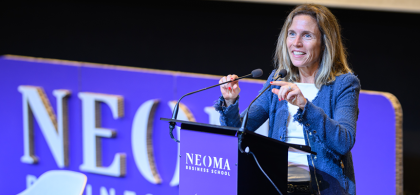
Justine Ryst, Managing Director of YouTube France and Southern Europe, came to share her trademark energy.
NEOMA’s world
Published on 03/04/2026
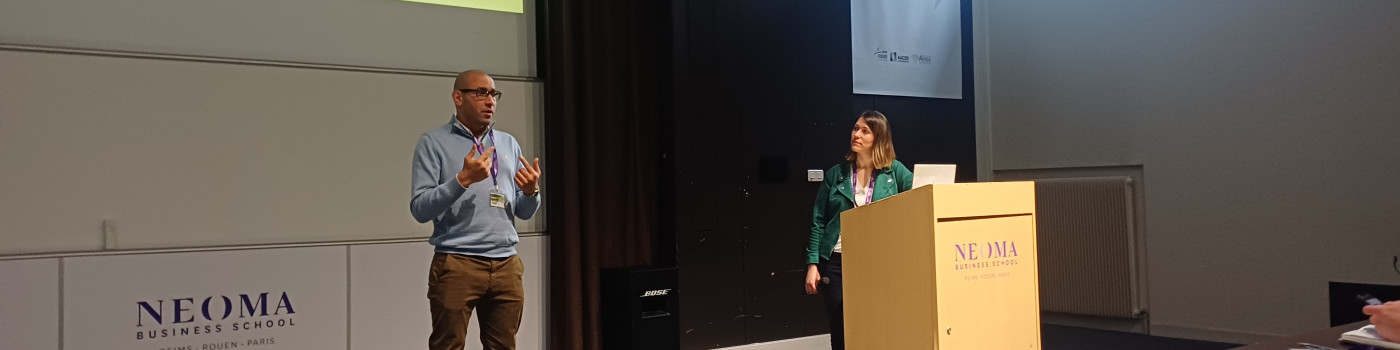
Safir Hanafi is a NEOMA graduate who went on to join the School’s incubator team, where he spent several years guiding emerging project leaders, watching them launch their ventures and return transformed, sometimes glowing with success, sometimes crestfallen. Safir envied these entrepreneurs, but didn’t have the courage to take the plunge himself. Then one day, he finally decided it was time to jump in.
Safir Hanafi isn’t a doctor, engineer or pharmacist. The whole project began when he was worried about his father, who suffers from a chronic illness and wasn’t taking his medication as prescribed. What was Safir supposed to do? Call his dad every day? Possible, sure, but it wouldn’t solve the problem. So Safir came up with the idea of a pill dispenser that would automatically release medication, send an alert if it wasn’t taken properly and allow the patient to be monitored remotely. He called it PillQare, the first AI-connected pill dispenser.
When Safir started out, he had nothing: no website, no team and not a euro to his name. “Absolutely nothing”, as he puts it, “I started from scratch.”
Finding a software engineer was doable. Finding a hardware engineer — someone to handle the product’s physical design — was a different matter altogether. “AI can’t pick up a screwdriver,” says Safir with a smile.
The turning point came while Safir was at his brother’s. The lawnmower had broken down, so they called a repairman they’d found on Leboncoin (the French equivalent of Gumtree). The person who showed up wasn’t just a handyman — he was, above all, a hardware engineer, exactly the profile Safir had been looking for. “Before he’d even finished repairing the lawnmower, I asked him: ‘You up for building a dispenser?’ And he said yes.” That’s how it all began.
Safir subsequently created the first AI-equipped pill dispenser. The device dispenses medication automatically, adapts to the habits of users and triggers alerts if they begin to let things slide. It’s a practical response to a major publichealth issue: medication adherence. “With traditional pill dispensers today,” explains Safir, “it's impossible to know whether a patient is taking their medication or not."
In just 12 months, PillQare has obtained CE certification: this means it’s a Class 1 medical device and cleared for commercialisation in Europe. The MDPH (France’s departmental agency for people with disabilities) approved a 100% reimbursement rate even before the product was put on the market. “We went before a commission of surgeons, doctors and clinic directors. They understood the impact at once. It was just crazy.”
Safir’s team today is made up of about 15 people. Hospitals in Switzerland, Luxembourg and Belgium are reaching out spontaneously. And to crown it all, PillQare has been featured on the M6 television show Qui veut être mon associé (Who Wants to Be My Partner?) with an audience of two million.
What did NEOMA give Safir? Years spent observing entrepreneurship from the inside: the highs and lows, the failures and come-backs. A visceral understanding of what a startup is really all about. And an unfailing clarity of vision. “I’m acutely aware that the odds of me failing are around 92%. But I’d rather try and fail, giving it everything, than not try and end up telling myself, ‘I could have done that.’”
11/09/2026
Justine Ryst, Managing Director of YouTube France and Southern Europe, came to share her trademark energy.
31/08/2026
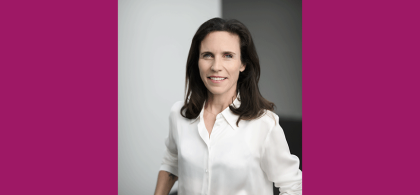
Justine Ryst, Director of YouTube France will be the patron of the PGE intake for the 2026 academic year.